Thursday, January 10, 2019


Mouth sores caused by cancer treatment: How to cope

Understand how to manage cancer treatment side effects, including mouth sores, so you can feel more in control as you go through cancer treatment.
By Mayo Clinic Staff
If you're about to begin cancer treatment, be aware that certain treatments can cause mouth sores (oral mucositis).
Mouth sores can be painful and distressing. They can range from a mere inconvenience to a severe complication that may make you unable to continue your cancer treatment.

What are cancer-related mouth sores?

Cancer-related mouth sores form on the inside lining of your mouth or on your lips. The mouth sores appear burn-like and can be painful, making it difficult to eat, talk, swallow and breathe.
Sores can appear on any of the soft tissues of your lips or your mouth, including the gums, tongue, and roof or floor of the mouth. Sores can also extend into the tube (esophagus) that carries food to your stomach.

How do cancer treatments cause mouth sores?

Chemotherapy and radiation — alone or combined — can cause mouth sores. That's because these cancer treatments are intended to kill rapidly growing cells, such as cancer cells.
Some healthy cells in your body also divide and grow rapidly, including the cells that line the inside of your mouth. Unfortunately these healthy cells are also damaged by chemotherapy and radiation.
Damage to the cells in your mouth makes it difficult for your mouth to heal itself and to fend off germs, leading to sores and infections.
Both chemotherapy and radiation can impair your body's germ-fighting system (immune system). With an impaired immune system, viruses, bacteria and fungi can more easily infect your mouth, causing mouth sores or making mouth sores worse.
Bone marrow transplants, also known as stem cell transplants, can lead to mouth sores if you develop graft-versus-host disease (GVHD). In GVHD, the transplanted cells try to reject your body's normal cells. The transplanted cells view your body's cells as foreign and attack them. Mouth sores are just one sign of GVHD.
Newer forms of cancer therapy, such as targeted therapy drugs or drugs that stimulate your immune system to fight cancer, can also produce mouth sores as a side effect. For some of these drugs — such as everolimus (Afinitor) — the sores may be prevented by using a mouthwash that contains the drug dexamethasone.
Here's what you may experience with each type of cancer treatment.

Chemotherapy

Whether you experience mouth sores while undergoing chemotherapy depends on the type and dose of medication you receive, as well as how often you receive your treatment. The chemotherapy drugs most likely to cause mouth sores include:
  • Capecitabine (Xeloda)
  • Cisplatin
  • Cytarabine (Depocyt)
  • Doxorubicin (Doxil)
  • Etoposide (Etopophos)
  • Fluorouracil
  • Methotrexate (Trexall)
Mouth sores caused by chemotherapy treatment usually develop a few days after treatment begins and go away within two or three weeks after stopping chemotherapy. The mouth sores usually reach their peak around the seventh day after chemotherapy treatment ends.

Head or neck radiation therapy

Only radiation aimed at your head or neck causes mouth sores. Whether your radiation treatment will cause mouth sores depends on how much radiation you receive and whether you're also receiving chemotherapy at the same time.
You may begin to experience mouth pain two to three weeks after you begin radiation. More-intense doses of radiation will cause mouth sores to develop more quickly. Mouth sores from radiation may last four to six weeks after your last radiation treatment.

Bone marrow transplant

Mouth sores associated with GVHD develop two to three weeks after a bone marrow transplant.
People who receive transplants usually receive high-dose chemotherapy or radiation to prepare their bodies for the transplant. Since these therapies also cause mouth sores, it can be difficult to tell whether the sores are from the transplant preparation treatment, from infections due to the effects of treatment on your immune system or from GVHD.
Your doctor may test cells from your mouth to determine what's causing your mouth sores.

What can you do to prevent mouth sores?

Although there's no guaranteed way to prevent mouth sores, you can reduce your risk. Talk to your doctor about your risk of developing mouth sores and whether you should try preventive measures.
Your doctor might recommend that you:
  • Get a dental checkup. Visit your dentist before you begin cancer treatment to take care of any unresolved dental issues, such as gum disease, cavities or teeth that need to be pulled. Any pain or infections in your mouth will only get worse once you begin treatment.
  • Tell your doctor if you have a history of mouth sores. If you've experienced recurring mouth sores in the past, tell your doctor.
    In some cases, medications may help prevent those types of mouth sores from occurring during cancer treatment. For instance, people who experience frequent mouth sores due to the herpes simplex virus may take an antiviral medication to prevent those mouth sores during treatment. A mouth rinse using the drug dexamethasone can help prevent mouth sores in people receiving the targeted drug everolimus.
  • Take care of your teeth. Get in the habit of brushing your teeth and rinsing your mouth several times a day. Check the labels on mouthwashes and avoid alcohol-based products.
    Floss every day, especially after eating. Developing a routine for your mouth care now will make it easier to continue throughout your treatment.
  • Stop smoking. If you smoke, quit. Smoking during treatment will make it harder for your mouth to heal itself.
  • Eat a diet rich in fruits and vegetables. Vary your diet to include plenty of fruits and vegetables. You'll need the vitamins and nutrients they provide to help your body fight infections during treatment.
Depending on your cancer and your treatment, your doctor may recommend other techniques for reducing your risk of mouth sores, such as:
  • Cold therapy (cryotherapy). If you're receiving fluorouracil, sometimes called 5-FU, or melphalan (Alkeran) as part of your chemotherapy treatment, it might help to swish ice chips or cold water around in your mouth for the first half-hour of your treatments. The cold limits the amount of the drug that reaches your mouth, reducing your risk of mouth sores.
  • Medication to repair mouth cells. Palifermin (Kepivance) stimulates the growth of cells on the surface of your mouth. If the cells of your mouth recover quickly, you're less likely to experience severe mouth sores.
    Palifermin is approved by the Food and Drug Administration for use in people with blood and bone marrow cancers who receive bone marrow transplants.

How do you treat mouth sores?

Despite efforts to prevent mouth sores, you may still develop them. Treating mouth sores involves minimizing your pain until the cells of your mouth heal and begin regenerating after your cancer treatment ends.
Tell your doctor if you develop any sensitivity in your mouth or notice any sores forming. Your doctor may recommend treatments, such as:
  • Coating agents. These medications coat the entire lining of your mouth, forming a film to protect the sores and minimize the pain you might feel while eating or drinking.
  • Topical painkillers. These medications can be applied directly to your mouth sores. Your mouth may feel numb when using painkillers, so be careful when eating or brushing your teeth because you won't be able to feel if you're causing more injury to your mouth.
In addition to medications, you can take simple steps to reduce the pain you feel from mouth sores. You might:
  • Avoid painful foods. Stay away from acidic foods and spicy foods that could further irritate your mouth. Avoid sharp and crunchy foods, such as chips, crackers and pretzels, and instead opt for softer foods cut in small pieces.
    Alcohol also can irritate an already sore mouth, so don't drink alcohol or use alcohol-based mouthwash.
    Eat foods at room temperature or slightly warm, since hot or cold foods might be painful to eat.
  • Eat small meals more frequently. Cut your food into small pieces and eat slowly.
  • Use a straw. A straw for drinking may help keep liquids away from sore areas in your mouth.
  • Continue cleaning your mouth. If it's too painful to use a toothbrush, ask your health care team or your dentist about special foam swabs, which are easier on your gums.
    Rinse out your mouth several times a day. Avoid mouthwashes that contain alcohol.
    Mix a weak saltwater solution to swish around in your mouth or try a combination of baking soda and warm water.

What happens if mouth sores become severe?

If your mouth sores progress, they can become severe and cause other complications. Sometimes these complications become so severe that you have to stop your cancer treatment temporarily.
Complications can include:
  • Infection. Mouth sores offer a convenient way for germs to get into your body. Since cancer treatment can weaken your immune system, serious infection can result. Continue cleaning your teeth and mouth during and after treatment to reduce your risk of infection.
  • Bleeding. Chemotherapy reduces your blood's ability to clot. Bleeding from your mouth can range from mild, with some spotting when you brush your teeth, to severe, with bleeding that's difficult to stop.
    When your mouth sores bleed, continue cleaning your mouth as best you can — even if that means just rinsing with water.
  • Difficulty eating and swallowing. Painful mouth sores can make eating and drinking difficult. If eating small meals of soft foods isn't helping and you're quickly losing weight, your doctor may recommend a feeding tube to get you the nutrients you need.

Monday, January 7, 2019


Breakthrough study stops cancer hijacking immune cells

MEDICAL
A new study has found a way to reverse one of cancer's crafty little tricks, where...
A new study has found a way to reverse one of cancer's crafty little tricks, where it hijacks the immune system to help its growth(Credit: lightsource/Depositphotos)
VIEW GALLERY - 2 IMAGES
Cancer is crafty, using a wide range of insidious tricks to ensure it can survive and spread in the body. But now researchers at Rush University and the University of California, San Diego have found a way to intervene in one of these schemes, preventing tumors from recruiting immune cells to help them grow and metastasize.
Myeloid cells are a type of white blood cell that patrols the body looking for pathogens, but there are actually two sub-types of them. The M1 macrophage has been found to suppress tumor growth, while M2s do the opposite – they fight off helpful T cells (the foot soldiers of the immune system) and actively help cancer grow and spread.
The new study uncovered a vital clue to what makes myeloid cells become one macrophage or the other. It turns out that the key is a protein called CD11b that is found on the surface of myeloid cells. When CD11b activity goes up, the number of M1 myeloid cells also increases, while low CD11b causes more M2 cells to develop. To take advantage of this, tumors actively suppress the protein to create more M2 cells and therefore boost their own growth.
With that mechanism uncovered, the researchers then experimented to see if CD11b could be a potential target for cancer treatment. They engineered mice that completely lacked the protein then transplanted tumors into them, and found that those tumors grew much bigger than tumors in control-group mice.
Next, the team tried the inverse. They gave normal mice a molecule called Leukadherin-1 (LA-1), which boosts the function of CD11b, and found that tumors shrank significantly. And finally, to make doubly sure that this protein was the right target, they engineered a mouse that had CD11b active all the time, instead of just sporadically like normal mice. Their tumors also shrank drastically.
The researchers say these results indicate that CD11b is a promising target for new cancer immunotherapy techniques. It will still be a number of years before it may be available as an option for human patients, but the team plans to continue working on it.
The research was published in the journal Nature Communications.

Wednesday, December 19, 2018

Client provided recommendation. Note: All of our clients privacy is respected.

Hi Susan,

I hope that this note finds you doing well and enjoying the holidays!

I bought a wig from you over the summer, and have been wearing it for all professional and social occasions for about the last 6 weeks.

I’m still learning, but it’s starting to feel more normal.  It surely feels like the best of my options for now.

Many of my close friends have complimented my great new hair cut and say that they love the look with “more bangs.”   We’ve had some good laughs when I quietly tell them that it’s “hair you wear” and they can’t believe it at first.  Those moments have been great therapy!

Best of all, I’m starting to feel like myself again, in that I’m looking forward to going out and having fun living my life, as I always have.

Thanks for taking such good care of me back in July!

Wishing you and yours a Merry Christmas and a happy and healthy New Year,

Wednesday, December 12, 2018


Unlikely drug pair combine to cut off cancer's energy supply

MEDICAL
An electron microscopy image of a cancer cell produced at the University of Basel
An electron microscopy image of a cancer cell produced at the University of Basel(Credit:University of Basel, Swiss Nanoscience Institute/Biozentrum)
Cancer cells are a hungry bunch, calling on relatively huge amounts of energy to feed their demanding metabolisms. There's a particular molecule that is pivotal to this process, converting nutrients into fuel to power the cells' rapid growth. New research out of the University of Basel describes a drug cocktail that has the effect of putting this out of action, leading the cancer cells to wither and die instead.
Molecular scientists at the University of Basel actually discovered two years ago that a commonly used diabetes drug could be combined with a 50-year-old hypertension medication to inhibit tumor growth. Named metformin and syrosingopine, respectively, the scientists knew beforehand that the former had some anti-cancer properties, but only by mixing it with the latter did it seem to have any meaningful effect.
They have now carried out follow-up experiments in mice to better understand how this process slows cancer growth, and it centers on a molecule called NAD+ that is central to converting nutrients into energy. NAD+ is produced through two cellular pathways, one of which metformin was known to block. The other, it has now been found, can be shut down by syrosingopine's ability to cause bottlenecks in some very key areas.
ADVERTISING
"In order to keep the energy-generating machinery running, NAD+ must be continuously generated from NADH," explains Don Benjamin, first author of the study. "Interestingly, both metformin and syrosingopine prevent the regeneration of NAD+, but in two different ways."
The metabolism of many cancer cells relies on a process called glycolysis, where they produce energy by breaking glucose down into lactate. But if enough lactate builds up it causes blockages in this pathway, something the cancer cells respond to by expelling them through special transporters. Syrosingopine's anti-cancer effects, as it turns out, are due to an ability to put these transporters out of action.
"We have now discovered that syrosingopine efficiently blocks the two most important lactate transporters and thus, inhibits lactate export," says Benjamin. "High intracellular lactate concentrations, in turn, prevent NADH from being recycled into NAD+."
The scientists found that the backlogs of lactate caused by syrosingopine, when combined with metformin, completely shut off the cells ability to produce NAD+. And depleted stocks of NAD+ mean insufficient energy levels, which in turn means cellular death.
They describe this as an important discovery, because currently there are no drugs available that block those lactate-transporting pathways of the cancer cells. These newfound abilities could lead to new cancer therapies that swiftly kill off deadly cells, and as the scientists note, a second career for a drug that was developed in the 1950s for another purpose entirely.
The study has been published in the journal Cell Reports.

Wednesday, December 5, 2018


Experience the Susan’s Special Needs exclusive difference.
We are like no other wig shop… For fashion, chemotherapy or alopecia.

Our wigs are custom tailored for a stylish and comfortable fit.

You may choose from our wonderful selection of over
700 human hair and synthetic wigs. Contemporary wig
designers from around the globe provide a new and
wonderful array of both human hair and synthetic wigs.

It’s all about choices to help you find the style and texture
that is right for you and your lifestyle. We work with a wide variety
of wig designers and manufacturers providing human hair and
synthetic wigs and headbands in all price ranges. Our wigs are
made in several modes of construction that are selected in density,
fiber content, style and color. We find that the lightweight wigs with
a natural skin top are most popular as they resemble and look like a
natural scalp. Our experienced stylists will review your treatment cycle
and talk about the hair loss process to assist you in mapping out
your plan of action. This plan may include a human hair or synthetic wig,
sleep cap, perhaps other headwear for casual wear, and products for your
scalp and skin. We will also talk about your personal choices and timing for
your custom tailoring of your wig.

We will guide and assist you in making all these decisions.

Our store is open  10 - 4 Tuesday - Friday and 10-2 Saturday
for your convenience. Give us a call (248-544-4287 or just stop by.

Appointments are recommended.

Our stylists also offer wig washing and styling services for a small fee. Please call us to discuss how we can serve you.

HAIR LOSS - MAYO CLINIC

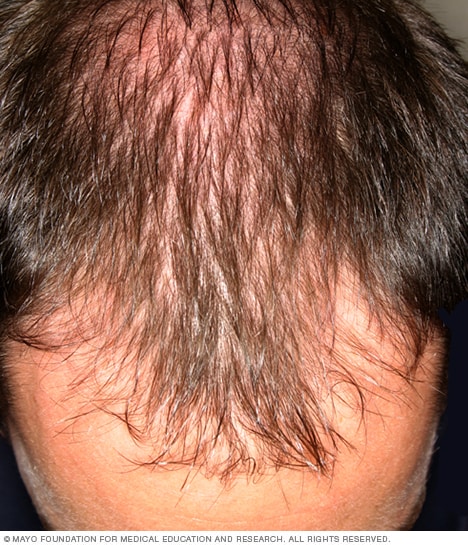
Hair loss can affect just your scalp or your entire body. It can be the result of heredity, hormonal changes, medical conditions or medications. Anyone can experience hair loss, but it's more common in men.
Baldness typically refers to excessive hair loss from your scalp. Hereditary hair loss with age is the most common cause of baldness. Some people prefer to let their hair loss run its course untreated and unhidden. Others may cover it up with hairstyles, makeup, hats or scarves. And still others choose one of the treatments available to prevent further hair loss and to restore growth.
Before pursuing hair loss treatment, talk with your doctor about the cause of your hair loss and treatment options.

Symptoms

Hair loss can appear in many different ways, depending on what's causing it. It can come on suddenly or gradually and affect just your scalp or your whole body. Some types of hair loss are temporary, and others are permanent.
Signs and symptoms of hair loss may include:
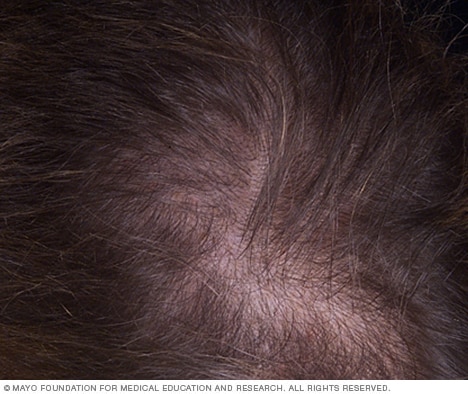
  • Gradual thinning on top of head. This is the most common type of hair loss, affecting both men and women as they age. In men, hair often begins to recede from the forehead in a line that resembles the letter M. Women typically retain the hairline on the forehead but have a broadening of the part in their hair.
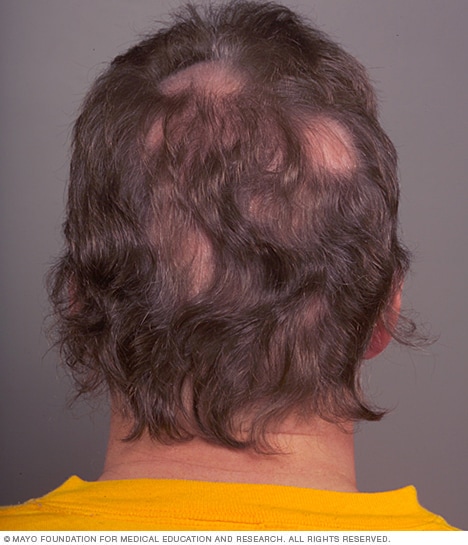
  • Circular or patchy bald spots. Some people experience smooth, coin-sized bald spots. This type of hair loss usually affects just the scalp, but it sometimes also occurs in beards or eyebrows. In some cases, your skin may become itchy or painful before the hair falls out.
  • Sudden loosening of hair. A physical or emotional shock can cause hair to loosen. Handfuls of hair may come out when combing or washing your hair or even after gentle tugging. This type of hair loss usually causes overall hair thinning and not bald patches.
  • Full-body hair loss. Some conditions and medical treatments, such as chemotherapy for cancer, can result in the loss of hair all over your body. The hair usually grows back.
  • Patches of scaling that spread over the scalp.This is a sign of ringworm. It may be accompanied by broken hair, redness, swelling and, at times, oozing.

When to see a doctor

See your doctor if your child or you are distressed by hair loss and want to pursue treatment. Also talk to your doctor if you notice sudden or patchy hair loss or more than usual hair loss when combing or washing your or your child's hair. Sudden hair loss can signal an underlying medical condition that requires treatment.

Causes

People typically lose about 100 hairs a day. This usually doesn't cause noticeable thinning of scalp hair because new hair is growing in at the same time. Hair loss occurs when this cycle of hair growth and shedding is disrupted or when the hair follicle is destroyed and replaced with scar tissue.
Hair loss is typically related to one or more of the following factors:
  • Family history (heredity). The most common cause of hair loss is a hereditary condition called male-pattern baldness or female-pattern baldness. It usually occurs gradually with aging and in predictable patterns — a receding hairline and bald spots in men and thinning hair in women.
  • Hormonal changes and medical conditions. A variety of conditions can cause permanent or temporary hair loss, including hormonal changes due to pregnancy, childbirth, menopause and thyroid problems. Medical conditions include alopecia areata (al-o-PEE-she-uh ar-e-A-tuh), which causes patchy hair loss, scalp infections such as ringworm and a hair-pulling disorder called trichotillomania (trik-o-til-o-MAY-nee-uh).
  • Medications and supplements. Hair loss can be a side effect of certain drugs, such as those used for cancer, arthritis, depression, heart problems, gout and high blood pressure.
  • Radiation therapy to the head. The hair may not grow back the same as it was before.
  • A very stressful event. Many people experience a general thinning of hair several months after a physical or emotional shock. This type of hair loss is temporary.
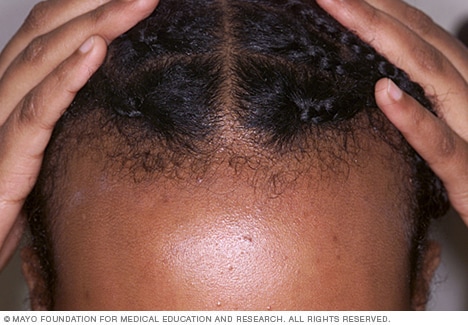
  • Certain hairstyles and treatments. Excessive hairstyling or hairstyles that pull your hair tight, such as pigtails or cornrows, can cause a type of hair loss called traction alopecia. Hot oil hair treatments and permanents can cause inflammation of hair follicles that leads to hair loss. If scarring occurs, hair loss could be permanent.

Risk factors

A number of factors can increase your risk of hair loss, including:
  • Family history of balding, in either of your parent's families
  • Age
  • Significant weight loss
  • Certain medical conditions, such as diabetes and lupus
  • Stress

Prevention

Most baldness is caused by genetics (male-pattern baldness and female-pattern baldness). This type of hair loss is not preventable.
These tips may help you avoid preventable types of hair loss:
  • Avoid tight hairstyles, such as braids, buns or ponytails.
  • Avoid compulsively twisting, rubbing or pulling your hair.
  • Treat your hair gently when washing and brushing. A wide-toothed comb may help prevent pulling out hair.
  • Avoid harsh treatments such as hot rollers, curling irons, hot oil treatments and permanents.
  • Avoid medications and supplements that could cause hair loss.
  • Protect your hair from sunlight and other sources of ultraviolet light.
  • Stop smoking. Some studies show an association between smoking and baldness in men.
  • If you are being treated with chemotherapy, ask your doctor about a cooling cap. This cap can reduce your risk of losing hair during chemotherapy.

Thursday, November 1, 2018


Stem cells: What they are and what they do

Stem cells and derived products offer great promise for new medical treatments. Learn about stem cell types, current and possible uses, ethical issues, and the state of research and practice.
By Mayo Clinic Staff
You've heard about stem cells in the news, and perhaps you've wondered if they might help you or a loved one with a serious disease. You may wonder what stem cells are, how they're being used to treat disease and injury, and why they're the subject of such vigorous debate.
Here are some answers to frequently asked questions about stem cells.

What are stem cells?

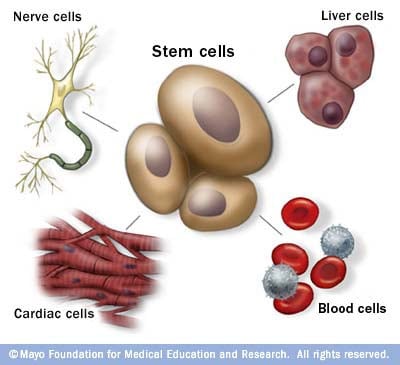
Stem cells are the body's raw materials — cells from which all other cells with specialized functions are generated. Under the right conditions in the body or a laboratory, stem cells divide to form more cells called daughter cells.
These daughter cells either become new stem cells (self-renewal) or become specialized cells (differentiation) with a more specific function, such as blood cells, brain cells, heart muscle cells or bone cells. No other cell in the body has the natural ability to generate new cell types.

Why is there such an interest in stem cells?

Researchers and doctors hope stem cell studies can help to:
  • Increase understanding of how diseases occur. By watching stem cells mature into cells in bones, heart muscle, nerves, and other organs and tissue, researchers and doctors may better understand how diseases and conditions develop.
  • Generate healthy cells to replace diseased cells (regenerative medicine). Stem cells can be guided into becoming specific cells that can be used to regenerate and repair diseased or damaged tissues in people.
    People who might benefit from stem cell therapies include those with spinal cord injuries, type 1 diabetes, Parkinson's disease, amyotrophic lateral sclerosis, Alzheimer's disease, heart disease, stroke, burns, cancer and osteoarthritis.
    Stem cells may have the potential to be grown to become new tissue for use in transplant and regenerative medicine. Researchers continue to advance the knowledge on stem cells and their applications in transplant and regenerative medicine.
  • Test new drugs for safety and effectiveness. Before using investigational drugs in people, researchers can use some types of stem cells to test the drugs for safety and quality. This type of testing will most likely first have a direct impact on drug development first for cardiac toxicity testing.
    New areas of study include the effectiveness of using human stem cells that have been programmed into tissue-specific cells to test new drugs. For the testing of new drugs to be accurate, the cells must be programmed to acquire properties of the type of cells targeted by the drug. Techniques to program cells into specific cells continue to be studied.
    For instance, nerve cells could be generated to test a new drug for a nerve disease. Tests could show whether the new drug had any effect on the cells and whether the cells were harmed.

Where do stem cells come from?

Researchers have discovered several sources of stem cells:
  • Embryonic stem cells. These stem cells come from embryos that are three to five days old. At this stage, an embryo is called a blastocyst and has about 150 cells.
    These are pluripotent (ploo-RIP-uh-tunt) stem cells, meaning they can divide into more stem cells or can become any type of cell in the body. This versatility allows embryonic stem cells to be used to regenerate or repair diseased tissue and organs.
  • Adult stem cells. These stem cells are found in small numbers in most adult tissues, such as bone marrow or fat. Compared with embryonic stem cells, adult stem cells have a more limited ability to give rise to various cells of the body.
    Until recently, researchers thought adult stem cells could create only similar types of cells. For instance, researchers thought that stem cells residing in the bone marrow could give rise only to blood cells.
    However, emerging evidence suggests that adult stem cells may be able to create various types of cells. For instance, bone marrow stem cells may be able to create bone or heart muscle cells.
    This research has led to early-stage clinical trials to test usefulness and safety in people. For example, adult stem cells are currently being tested in people with neurological or heart disease.
  • Adult cells altered to have properties of embryonic stem cells (induced pluripotent stem cells). Scientists have successfully transformed regular adult cells into stem cells using genetic reprogramming. By altering the genes in the adult cells, researchers can reprogram the cells to act similarly to embryonic stem cells.
    This new technique may allow researchers to use reprogrammed cells instead of embryonic stem cells and prevent immune system rejection of the new stem cells. However, scientists don't yet know whether using altered adult cells will cause adverse effects in humans.
    Researchers have been able to take regular connective tissue cells and reprogram them to become functional heart cells. In studies, animals with heart failure that were injected with new heart cells experienced improved heart function and survival time.
  • Perinatal stem cells. Researchers have discovered stem cells in amniotic fluid as well as umbilical cord blood. These stem cells also have the ability to change into specialized cells.
    Amniotic fluid fills the sac that surrounds and protects a developing fetus in the uterus. Researchers have identified stem cells in samples of amniotic fluid drawn from pregnant women to test for abnormalities — a procedure called amniocentesis.
    More study of amniotic fluid stem cells is needed to understand their potential.

Why is there a controversy about using embryonic stem cells?

Embryonic stem cells are obtained from early-stage embryos — a group of cells that forms when a woman's egg is fertilized with a man's sperm in an in vitro fertilization clinic. Because human embryonic stem cells are extracted from human embryos, several questions and issues have been raised about the ethics of embryonic stem cell research.
The National Institutes of Health created guidelines for human stem cell research in 2009. The guidelines define embryonic stem cells and how they may be used in research, and include recommendations for the donation of embryonic stem cells. Also, the guidelines state embryonic stem cells from embryos created by in vitro fertilization can be used only when the embryo is no longer needed.

Where do these embryos come from?

The embryos being used in embryonic stem cell research come from eggs that were fertilized at in vitro fertilization clinics but never implanted in a woman's uterus. The stem cells are donated with informed consent from donors. The stem cells can live and grow in special solutions in test tubes or petri dishes in laboratories.

Why can't researchers use adult stem cells instead?

Although research into adult stem cells is promising, adult stem cells may not be as versatile and durable as are embryonic stem cells. Adult stem cells may not be able to be manipulated to produce all cell types, which limits how adult stem cells can be used to treat diseases.
Adult stem cells also are more likely to contain abnormalities due to environmental hazards, such as toxins, or from errors acquired by the cells during replication. However, researchers have found that adult stem cells are more adaptable than was first thought.

What are stem cell lines and why do researchers want to use them?

A stem cell line is a group of cells that all descend from a single original stem cell and are grown in a lab. Cells in a stem cell line keep growing but don't differentiate into specialized cells. Ideally, they remain free of genetic defects and continue to create more stem cells. Clusters of cells can be taken from a stem cell line and frozen for storage or shared with other researchers.

What is stem cell therapy (regenerative medicine) and how does it work?

Stem cell therapy, also known as regenerative medicine, promotes the repair response of diseased, dysfunctional or injured tissue using stem cells or their derivatives. It is the next chapter in organ transplantation and uses cells instead of donor organs, which are limited in supply.
Researchers grow stem cells in a lab. These stem cells are manipulated to specialize into specific types of cells, such as heart muscle cells, blood cells or nerve cells.
The specialized cells can then be implanted into a person. For example, if the person has heart disease, the cells could be injected into the heart muscle. The healthy transplanted heart muscle cells could then contribute to repairing defective heart muscle.
Researchers have already shown that adult bone marrow cells guided to become heart-like cells can repair heart tissue in people, and more research is ongoing.

Have stem cells already been used to treat diseases?

Yes. Doctors have performed stem cell transplants, also known as bone marrow transplants. In stem cell transplants, stem cells replace cells damaged by chemotherapy or disease or serve as a way for the donor's immune system to fight some types of cancer and blood-related diseases, such as leukemia, lymphoma, neuroblastoma and multiple myeloma. These transplants use adult stem cells or umbilical cord blood.
Researchers are testing adult stem cells to treat other conditions, including a number of degenerative diseases such as heart failure.

What are the potential problems with using embryonic stem cells in humans?

For embryonic stem cells to be useful in people, researchers must be certain that the stem cells will differentiate into the specific cell types desired.
Researchers have discovered ways to direct stem cells to become specific types of cells, such as directing embryonic stem cells to become heart cells. Research is ongoing in this area.
Embryonic stem cells can also grow irregularly or specialize in different cell types spontaneously. Researchers are studying how to control the growth and differentiation of embryonic stem cells.
Embryonic stem cells might also trigger an immune response in which the recipient's body attacks the stem cells as foreign invaders, or the stem cells might simply fail to function normally, with unknown consequences. Researchers continue to study how to avoid these possible complications.

What is therapeutic cloning, and what benefits might it offer?

Therapeutic cloning, also called somatic cell nuclear transfer, is a technique to create versatile stem cells independent of fertilized eggs. In this technique, the nucleus, which contains the genetic material, is removed from an unfertilized egg. The nucleus is also removed from the cell of a donor.
This donor nucleus is then injected into the egg, replacing the nucleus that was removed, in a process called nuclear transfer. The egg is allowed to divide and soon forms a blastocyst. This process creates a line of stem cells that is genetically identical to the donor's cells — in essence, a clone.
Some researchers believe that stem cells derived from therapeutic cloning may offer benefits over those from fertilized eggs because cloned cells are less likely to be rejected once transplanted back into the donor and may allow researchers to see exactly how a disease develops.

Has therapeutic cloning in people been successful?

No. Researchers haven't been able to successfully perform therapeutic cloning with humans despite success in a number of other species.
However, in recent studies, researchers have created human pluripotent stem cells by modifying the therapeutic cloning process. Researchers continue to study the potential of therapeutic cloning in people.